People ask “does my dog trust me” like there’s a single test for it. A nose boop, a belly offered up, a tail wag. After sixteen years with Nikita, I can tell you trust isn’t a moment you catch. It’s thousands of ordinary repetitions that quietly add up to something bigger than any one of them.
Voluntary Closeness
Any dog can be made to stay near you with a leash or a closed door. Trust shows up in what a dog chooses when they don’t have to. Nikita picking a spot near me when she could just as easily nap across the room says more than any single gesture could. It’s not about proximity being forced. It’s about proximity being chosen, repeatedly, without a reason attached.
Relaxed Routines
A dog who trusts their environment and the people in it tends to relax into routine rather than staying alert through it. Nail trims that don’t require a production. Vet visits handled calmly because the pattern of “this happens, then this happens” has been proven reliable over years. The quiet, unremarkable parts of daily life are often where trust is most visible, precisely because nothing dramatic needs to happen for the dog to feel fine.
Seeking You Out for Help
A dog who trusts you looks to you when something’s uncertain, a strange noise, an unfamiliar object, a new person at the door. Not panic, just a glance or a check-in, as if to ask whether this is something to worry about. That kind of looking-to-you behavior, built over time, is one of the more reliable signs than any single physical gesture.
Comfortable, Vulnerable Rest
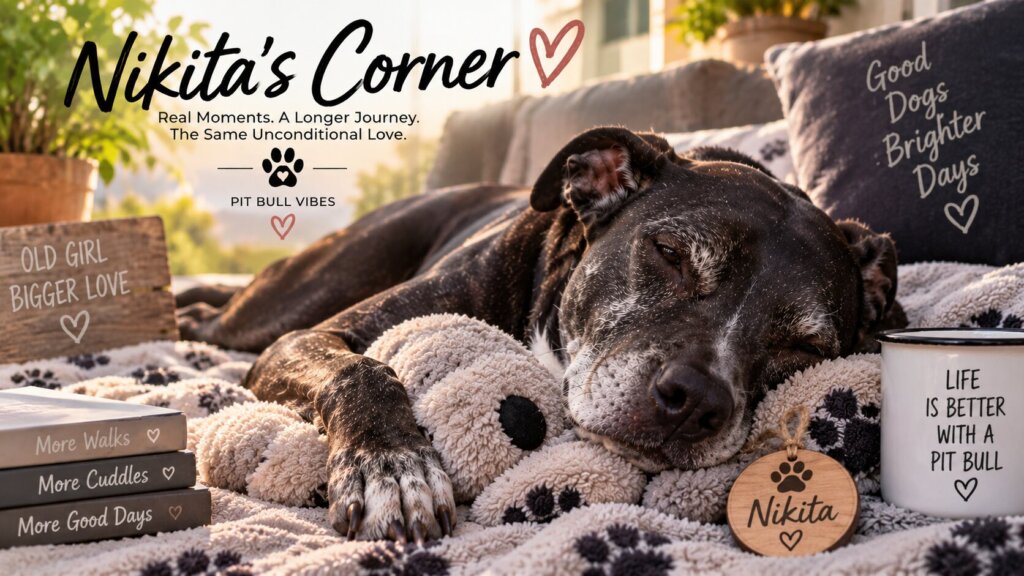
Sleeping deeply, fully relaxed, in a shared space is a bigger trust signal than people give it credit for. A dog who can’t fully rest around you hasn’t gotten there yet. A dog sprawled out, ears loose, breathing slow, has decided this is a safe place to be unguarded. That’s worth noticing, not just enjoying.
Predictable, Repeated Interaction
This is the one that doesn’t make for a dramatic headline, but it’s the real engine behind all of it: thousands of consistent, predictable interactions. The same calm tone after a mistake. The same reliable schedule. The same response to the same cues, day after day, year after year. Trust isn’t built in a single gesture any more than sixteen years together is built in a single day. It’s accumulated familiarity, repetition by repetition.
One Dog, Not a Universal Dictionary
It’s worth resisting the urge to turn specific behaviors into a universal Pit Bull trust checklist. Leaning can mean different things for different dogs. Following you everywhere isn’t automatically a trust signal for every dog in every context; sometimes it’s anxiety, sometimes it’s habit, sometimes it really is trust. The useful question isn’t “does this behavior equal trust” in general. It’s “what does relaxed, voluntary, predictable behavior look like in my specific relationship with my specific dog.”
For us, that answer took sixteen years to fully see, and it was never one gesture. It was all of them, together, for a very long time.